

Skip to content
babble-team-banner-3

Cyber Security

Stay HIDDEN. Stay Secure.

Cyber threats are constantly evolving, and a single breach can mean downtime, lost data, and customers who stop trusting you. Too often, businesses treat security as a series of one-off projects, when it should be a structured programme that keeps pace as threats change.

That's where HIDDEN comes in. Our framework for giving you the clarity, control, and confidence to stay protected.


Why cyber security becomes difficult to manage

The problem is rarely one big weakness. As attacks get faster, more automated, and harder to spot, it's the gaps between your people, devices, systems, and network that create the most risk.

Most security setups were never designed as one connected system. A firewall here, antivirus there, MFA on some apps but not all, one training session. Each a sensible step at the time, but no one's quite sure who owns what, or whether you'd actually hold up under a real attack.

The result? You lose visibility, ownership gets blurry, and your IT team ends up holding the whole thing together on top of everything else they're juggling.

HIDDEN helps you validate what's already working and see where the biggest gaps are forming, across six key areas, so you can prioritise and treat your cyber security as what it should be: a strategy, not a series of reactions.

Babble-Services-Laptop
You're stuck firefighting

Small IT teams often end up firefighting incidents, audits, and urgent risks instead of improving it in a structured way.

You lose sight of your exposure

As users, devices, systems, and suppliers grow, it becomes harder to clearly see where exposure exists.

Tools and ownership drift apart

Security controls overlap, responsibilities become unclear, and gaps between systems often go unnoticed.

You don't know where to start

Without a clear structure, prioritising risk, measuring improvement, and understanding what good looks like becomes much harder.

More tools, no more visibility

Despite already owning the tools, disconnected systems and inconsistent setups mean risks stay hidden.

It all lands on your IT team

Cyber security ends up as one more job on an already stretched IT team, without the specialist depth to do it justice.

How the HIDDEN framework works

HIDDEN helps you make cyber security easier to understand, prioritise, and improve.

Clarity. Control. Confidence.

The HIDDEN Snapshot

You can't fix what you can't see

You can probably list the security tools you already use. But if you were asked to explain where your biggest risks lie, could you?

Without the visibility of how your people, identities, data, recovery, endpoints and networks work together, you end up prioritising by guesswork.

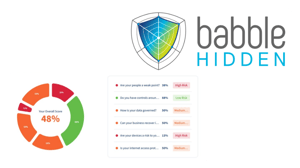
The HIDDEN Snapshot gives you a practical starting point for understanding where risk exists across your systems, where protection is strong, and what needs attention first.

It helps you build a clearer picture of how security works across your whole environment, not just inside individual tools.

What the HIDDEN Snapshot gives you:

  • Visibility across users, devices, systems, and data
  • Clear identification of gaps and weak spots
  • Prioritised actions based on real risk
  • A measurable baseline for improvement
  • A clearer picture of how security works as a whole
Hidden Snapshot

What happens next

You’ll receive a practical breakdown of your current position, including where protection is strong, where risks exist, and what to focus on next. No generic recommendations. Just a clearer picture of your environment and a practical path forward.

quote-vector-2
We learnt a huge amount. It was better doing this in a controlled manner instead of waiting until we are hit for real. We now understand a lot more about our systems and our people have gained useful experience, which has only improved our readiness for a real attack.
Mark Dawson, Head of Service AssuranceBritish Library
Protect

What changes when your security works as one

Security gets easier to improve when you can see how everything connects. When your people, endpoints, infrastructure, data, and recovery are managed separately, the gaps between them are where the risk lives.

Bring those same capabilities together as one connected approach, and you get clearer visibility, more consistent protection, and a setup you can actually stay on top of.


You can clearly see your risk
  • Visibility across users, devices, infrastructure, and data
  • A clear view of where you're actually exposed
  • Confidence about what to fix first
Protection that holds together
  • Your controls work as one, not in isolation
  • Fewer gaps for attackers to slip through
  • A lower likelihood, and impact, of a breach
Confidence you could recover
  • Faster to spot and respond to incidents
  • Clear, tested escalation and recovery
  • Real assurance you'd get back up and running
A posture you can prove and keep improving
  • Structured reporting and maturity tracking
  • A clear path of prioritised improvements
  • Evidence you can show insurers, customers, and your board

Protect

Protect your people, identities, data, recovery, endpoints and networks as one system; prioritise with confidence and keep improving over time.

COS - Protect
The HIDDEN framework

How HIDDEN helps to structure cyber security

Cyber risk rarely lies in one area. It builds across people, identity, devices, data, infrastructure, and recovery processes without warning.

HIDDEN structures cyber security around the six key areas that most commonly create risk, making it easier to identify weaknesses, validate strengths, prioritise action, and improve security consistently over time.

 

Babble-Hidden-RGB

Human risk

Most cyber attacks don’t start with technology, they start with people. Understand where everyday behaviour, awareness, and ways of working could expose the business.

Identity management

Access is your biggest attack surface. Keep access visible and appropriate as users, roles, devices, and suppliers change.

Data controls

Sensitive data is only secure when you can see how it moves. Understand where critical information is stored, shared, accessed, and exposed.

Disaster recovery

Backups don’t matter if you can’t recover. Make sure recovery, continuity, and backup processes work when the business needs them most.

Endpoint protection

Every device is a potential entry point into your business, not just laptops. Maintain visibility, consistency and protection across laptops, mobiles, servers, and connected endpoints.

Network & cloud security

Your network is bigger than you think, and harder to control than it looks. Understand where infrastructure, cloud services and connectivity may be creating hidden risk.

What this structure improves

  • A concise view of where risk exists across the business
  • Better alignment between security controls and technologies
  • Fewer gaps between systems, suppliers, and processes
  • Clear prioritisation of what needs attention first
  • A clearer roadmap for improving security over time

The right cyber security approach depends on where you are today

The right next step depends on where you're starting from. If your approach still feels reactive, or you can't clearly see where your biggest risks sit, the priority is getting visibility, structure, and control in place first. If you've already got a well-established posture, it's about strengthening resilience, monitoring, and response.


HIDDEN

Gain clarity, control, and confidence 

A structured approach built around the HIDDEN framework, helping you understand your risk clearly and keep improving it. This is the right starting point if:

This is the right starting point if: 

  • You don’t have a clear view of your current security position 
  • Security decisions are reactive rather than structured 
  • Responsibility is spread across teams or suppliers 
  • Your existing tools don't feel connected or consistently managed
Explore the HIDDEN Framework
Complex Cyber Security

For when cyber risk gets more complex and needs deeper, specialist support. Advanced monitoring, response, and governance for organisations that need greater visibility, faster response, and stronger resilience. 

This is the right next step if: 

  • You already have advanced cyber controls in place 
  • You need unique monitoring and response capabilities
  • Your setup is highly regulated or operationally complex 
  • Your internal team needs additional specialist depth

Our partners

We work with leading security vendors to help you improve visibility, strengthen protection, and manage cyber risk more effectively.


Cyber security isn’t something you finish

Risk changes constantly as your people, suppliers, technologies, and ways of working evolve. Most organisations already have controls in place. The challenge is keeping a clear view of where you're exposed, what's improving, and what needs attention next.

That's why we don't treat security as a one-off project. HIDDEN shows you where to focus across six areas. AIME is how we deliver and keep improving it.

A continuous cycle of Assess, Implement, Manage, and Evolve.


Assess

Understand where you stand: your strengths, weaknesses, and exposure across the six areas, with a clear baseline to improve from. 

Implement 

Design and put in place the controls, policies, technologies, and processes that address where your risk actually sits. 

Manage

Maintain visibility, support day-to-day security, and measure the impact so you can see it's working.

Evolve

Use what the data tells you to keep adapting your controls, policies, and technology as your risks and needs change.

This is how cyber security becomes a capability you can continuously improve — not something revisited only after an incident. 
quote-vector-2

I am really pleased that Babble helped to set up and manage this proof of concept project. It gave us the confidence necessary to replace our existing WAF solution. What really impressed us was how easy it was to deploy and use. There are lots of options and depth, but the controls are simple and the dashboards are really clear. We're delighted with the project. It's done exactly what we wanted it to do.

Financial services organisation

Our cyber credentials

CTA-Banner-BG

Meet the cyber security specialists

Behind every strong security posture is a specialist team that knows where the risks hide. We work with businesses like yours to make sense of your current setup, find the gaps that actually matter, and turn scattered, reactive security into something structured you can stay on top of, in plain English, without the scare tactics.

Talk to us about how to: 

  • Understand where your security really stands
  • Prioritise the risks that actually matter
  • Improve visibility across your users, devices, and data
  • Strengthen resilience with practical, prioritised steps
  • Move from reactive firefighting to a structured approach



Callum Archer
Callum Archer
Solution Specialist
Nisha Sondhi
Nisha Sondhi
Solution Specialist

FAQs

How do we know if we’re actually secure?

Honestly, most small and medium sized businesses can't say for sure, and that's the real risk. Owning security tools isn't the same as knowing where your gaps are. Being secure is about visibility: how your protection holds up across your people, data, devices, and network, not just whether a tool is switched on. A quick assessment across those areas tells you where you actually stand.

Read more: 

Where are we most exposed right now?

For most businesses, it's people. Phishing, weak passwords, and stolen credentials are still the most common way in. Beyond that, real exposure builds in the gaps between your people, systems, suppliers, devices, and data that have never been assessed together, which is why many only find it once something's gone wrong.

Read more: 

What part of our cyber security should we fix first?

Start with visibility and structure. Once you can clearly see where risk sits, prioritisation becomes much easier. Without that picture, security decisions are reactive rather than strategic.

Read more: 

Do we need advanced security tooling or just better control of what we already have?

Usually, better control comes first. Improving visibility, consistency, and control often delivers more value before introducing advanced capabilities. Once those foundations are in place, more advanced monitoring and response services become significantly more effective.

Read more: 

How do we prove to leadership that security is improving?

Give them something measurable. Start with a clear baseline, a score across each area of your security, then track it. Leadership can see in plain terms where you started, what's improved, and what you're tackling next, instead of taking "we're fine" on trust.

Read more: